
Dual Carriageway Lessons for Safer Driving

The first time you approach a dual carriageway slip road, the traffic can feel much faster than anything you have met on a normal lesson route. There is more to watch, less time to decide and a real need to trust your observations. Dual carriageway lessons give you the space to build those skills gradually, so faster roads feel manageable rather than intimidating.
For many learners, dual carriageways are introduced once the foundations are secure: moving off safely, controlling the car, using mirrors well and making sound decisions at junctions. They are not simply about driving at a higher speed. They are about planning further ahead, judging other road users accurately and staying calm when the road layout changes quickly.
Why dual carriageway lessons matter
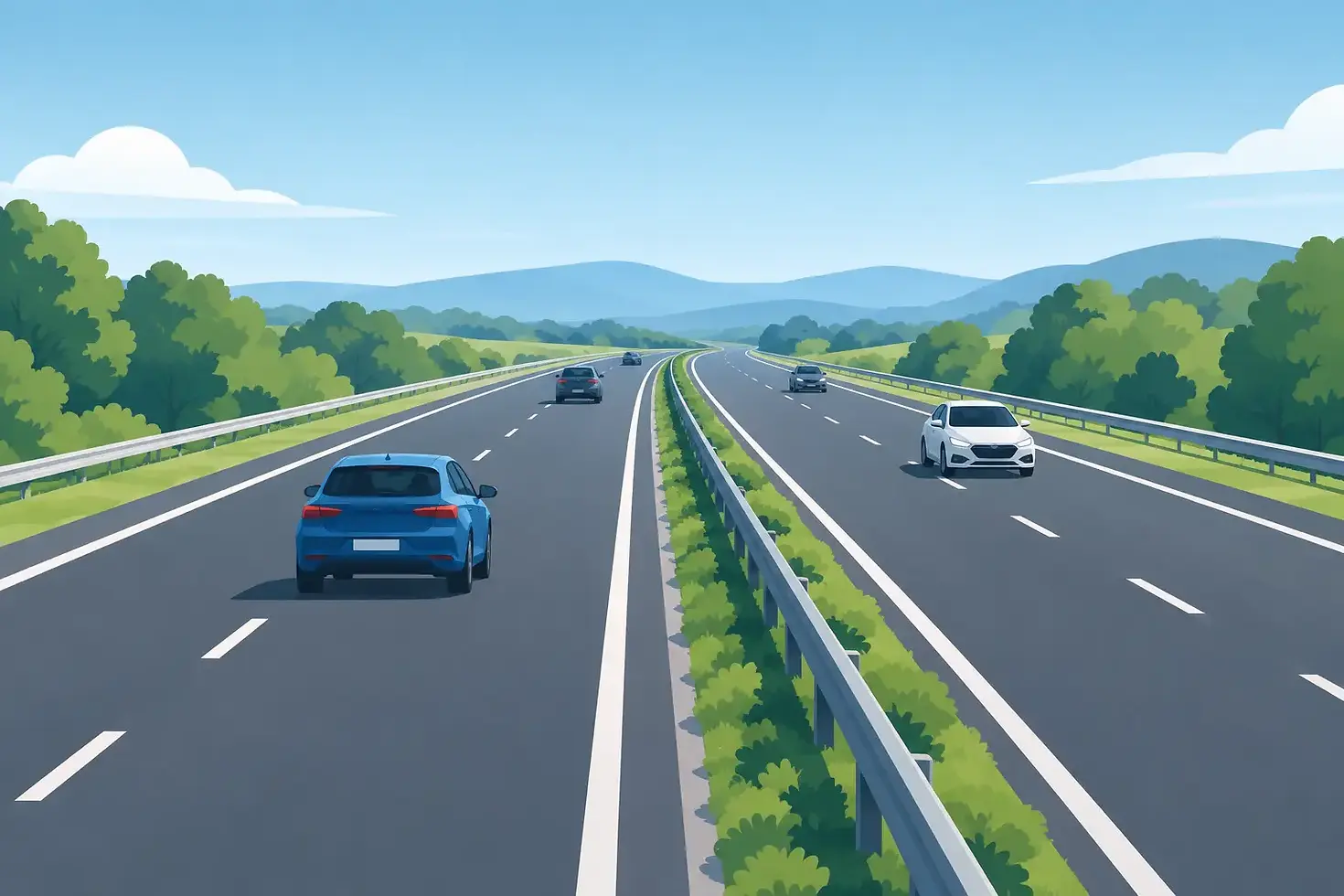
A dual carriageway has a central reservation separating traffic travelling in opposite directions. It may have two or more lanes in each direction, and the national speed limit for cars is usually 70 mph, unless signs show otherwise. That higher limit changes the way you need to drive.
At 70 mph, a small hesitation or late decision has a much bigger effect than it would in town. You need to look well ahead for signs, lane markings, brake lights and traffic joining from slip roads. You also need enough space around your vehicle to react safely if conditions change.
These roads are a useful bridge between everyday local driving and motorway driving. They help you become comfortable with joining faster traffic, overtaking responsibly and leaving the road without rushed manoeuvres. Those are valuable skills whether you are preparing for a driving test, taking Pass Plus or returning to driving after time away.
Building confidence before the speed increases
A good lesson does not begin by placing you in the busiest possible situation and hoping you cope. Your instructor should choose a route and timing that suit your experience, then increase the challenge as your confidence develops.
You may start by driving on a quieter stretch of dual carriageway, practising lane discipline and reading signs early. As you become more settled, lessons can include busier junctions, shorter slip roads or routes where you need to make more decisions. This structured approach helps turn unfamiliar situations into repeatable routines.
Everyone learns at a different pace. Some pupils are comfortable with speed but need support judging gaps. Others may understand the process clearly but feel anxious about traffic passing on both sides. Tailored instruction matters because confidence grows through understanding, not pressure.
For neurodivergent learners, a calm and clearly sequenced approach can be particularly helpful. Discussing the route, likely road signs and key decisions before setting off can reduce the amount to process in the moment. An instructor can also break a complex task into smaller stages, allowing time to practise each one without feeling overwhelmed.
Joining from a slip road
Joining is often the part learners worry about most. The aim is to use the slip road to build an appropriate speed, observe the traffic already on the carriageway and join when there is a safe gap. Traffic on the main carriageway normally has priority, so drivers joining must not force others to brake or swerve.
Your instructor will help you develop a routine that includes checking mirrors, looking ahead, assessing the flow of traffic and making a positive decision. You may need to adjust your speed to fit into a gap, but stopping on a slip road is usually unsafe unless traffic conditions leave no other option.
The key is not finding a perfect, empty space. It is reading the traffic early enough to make a safe and controlled choice. With practice, you will become better at spotting developing gaps and matching your speed without panic.
Lane discipline and overtaking
On a dual carriageway, keep to the left-hand lane unless you are overtaking or following signs that direct you elsewhere. Once you have overtaken safely, return to the left when there is a suitable gap. Staying in the right-hand lane when it is clear on the left can hold up other traffic and create unnecessary risk.
Overtaking needs patience. Before moving out, you need to check your mirrors, consider your blind spot, assess the speed of vehicles behind and make sure there is enough room to complete the manoeuvre without cutting in. You should never exceed the speed limit to overtake.
It is also important to recognise when not to overtake. A lorry ahead may be travelling slowly, but a bend, reduced visibility, an upcoming exit or heavy traffic may mean it is safer to remain behind. Responsible driving is not about making maximum progress at every opportunity. It is about choosing the safest option for the road and conditions.
Reading the road earlier
Dual carriageway driving rewards forward planning. Direction signs often appear well before junctions, giving you time to identify your exit and move into the correct lane. If you wait until the last moment, you may be tempted to change lanes suddenly or miss your turning altogether.
Missing an exit is rarely a problem. Taking a later route is always safer than cutting across lanes. One of the most valuable habits you can develop is allowing yourself to continue when a manoeuvre no longer feels safe. That is good judgement, not a mistake.
Weather and visibility also matter more at higher speeds. Rain increases stopping distances and can reduce grip, particularly where standing water is present. Low sun can make it difficult to see brake lights or signs, while darkness changes how far ahead you can read the road. Your speed should always suit the conditions, even when the posted limit is higher.
Leaving the carriageway safely
As you approach an exit, check signs early and move into the left lane in good time. Use your mirrors, signal when appropriate and avoid harsh braking on the main carriageway. The slip road is normally where you reduce speed, checking for the advisory limit shown on signs.
Some exits lead straight to roundabouts, where traffic may be moving slowly or queuing. Looking well ahead helps you prepare for this change from fast-flowing traffic to a much lower speed. This is another reason why smooth, early planning makes such a difference.
What you will practise in a structured lesson
Dual carriageway lessons can cover joining, leaving, lane positioning, overtaking, safe following distances and responding to changing traffic conditions. You may also practise dealing with roadworks, variable speed limits, large vehicles, emergency vehicles and drivers who make unexpected decisions.
The best lessons include time to talk through what happened afterwards. Perhaps a gap looked smaller than it was, or perhaps you identified a sign too late and needed a second attempt. Reviewing these moments without judgement helps you understand why a decision worked and what to do differently next time.
At U Drive Norfolk, lessons are shaped around the individual rather than a fixed timetable. For some people, one well-planned session on faster roads provides a useful confidence boost. Others benefit from several sessions, especially if they have avoided dual carriageways since passing their test. The right amount of practice depends on your current experience, comfort level and the type of driving you expect to do.
Beyond the driving test
Your driving test may involve dual carriageway driving where the local test routes allow, but safe driving on these roads should not be treated as a box to tick. Real independence often means travelling further, driving to unfamiliar places or coping with busy traffic when there is no instructor beside you.
Pass Plus training can be a helpful next step for newly qualified drivers who want more experience of higher-speed roads. Refresher lessons can also provide a supportive route back for drivers who have not used dual carriageways for years, or who feel nervous after a difficult experience.
Confidence does not mean never feeling alert. It means knowing how to observe, plan and respond safely when the road asks more of you. With patient practice and clear guidance, faster roads can become another familiar part of your driving journey.


Comments